
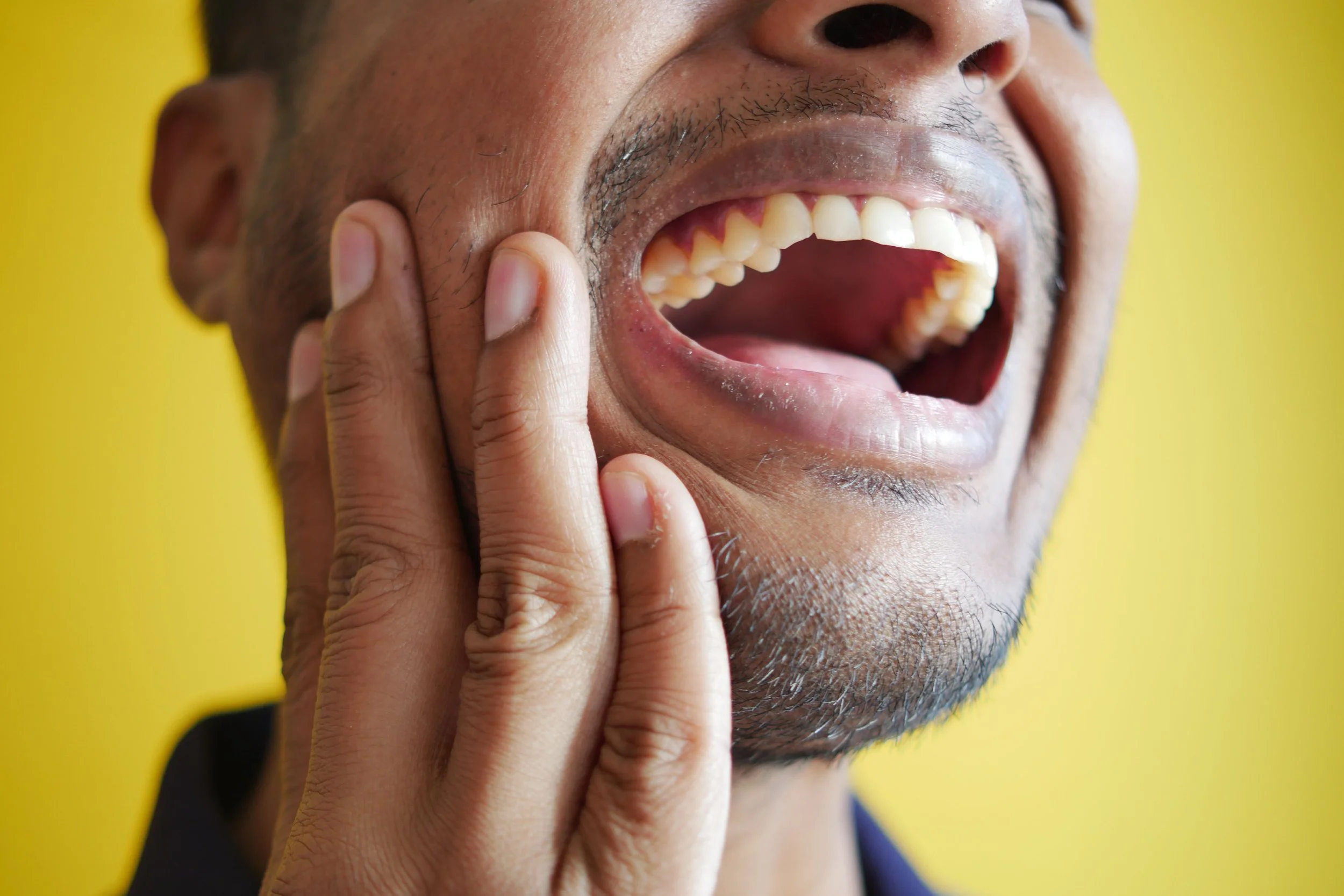
Have you ever bitten into a sandwich, chewed something crunchy, or simply closed your teeth together and suddenly felt a sharp pain in one tooth?
Tooth pain when biting down shouldn’t be ignored. Even if the discomfort comes and goes, pain or pressure while chewing can be a sign that something is happening beneath the surface of your tooth or gums.
The cause may be as simple as irritation around the tooth, but it can also point to a cavity, cracked tooth, damaged filling, infection, or another dental problem that needs attention.
Here are some of the most common reasons your tooth may hurt when you bite down.
1. You May Have a Cavity
Tooth decay can gradually weaken the structure of a tooth. As a cavity becomes deeper, the tooth may become increasingly sensitive to pressure, sweets, hot or cold temperatures, and chewing.
You might not always see a cavity yourself. Decay can develop between teeth or underneath an existing restoration, which is why a dental examination and X-rays may be necessary to determine what is causing the pain.
2. Your Tooth Could Be Cracked
A cracked tooth is another common reason for pain when chewing.
Cracks can develop from biting hard foods, grinding or clenching your teeth, an injury, or simply years of wear and tear. Some cracks are extremely small and difficult to see.
One clue is pain that occurs when you bite down or when you release your bite. The discomfort may also seem inconsistent, making it difficult to identify exactly which tooth is causing the problem.
Treatment depends on the location and severity of the crack. Addressing a cracked tooth early may help prevent further damage.
3. A Filling or Crown May Be Causing the Problem
If you've recently had a filling or dental crown placed, the treated tooth may feel slightly different at first.
However, if the restoration sits a little too high, it can receive more pressure than the surrounding teeth when you bite. This can make chewing uncomfortable.
An older filling or crown can also become damaged, loose, or worn over time. If you notice pain around a restored tooth, especially when chewing, have your dentist examine it rather than avoiding that side of your mouth.
4. The Nerve Inside the Tooth May Be Inflamed
Inside every tooth is soft tissue containing nerves and blood vessels, known as the pulp.
Deep decay, cracks, repeated dental procedures, or trauma can irritate or damage this tissue. You may experience pain when chewing as well as sensitivity to hot or cold foods and drinks.
In some cases, discomfort may linger even after the hot or cold item has been removed.
If the pulp becomes severely inflamed or infected, additional treatment may be necessary to save the tooth.
5. You Could Have a Dental Abscess
A dental abscess is an infection that can develop around a tooth or its root.
In addition to pain when biting or chewing, possible symptoms can include:
Persistent or throbbing toothache
Swelling around the gums or face
Sensitivity to hot or cold temperatures
A bad taste in the mouth
A pimple-like bump on the gums
Fever or feeling unwell
A suspected dental infection should be evaluated promptly. Dental abscesses generally do not resolve simply by waiting for the pain to disappear.
6. Gum Problems Can Make a Tooth Hurt When Chewing
Sometimes the pain isn't coming directly from the tooth.
Inflamed or infected gums can make the area surrounding a tooth tender. More advanced gum disease can also affect the tissues and bone supporting your teeth.
Bleeding gums, persistent bad breath, gum recession, swelling, or teeth that feel loose are additional signs that your gums should be evaluated.
7. You May Be Grinding or Clenching Your Teeth
Do you wake up with sore teeth or a tired jaw?
Grinding or clenching your teeth, also known as bruxism, places additional pressure on your teeth and jaw. Over time, this pressure can contribute to tooth sensitivity, small cracks, worn enamel, headaches, and discomfort while chewing.
Because grinding often happens during sleep, many people don't realize they're doing it.
A dentist can look for signs of wear and discuss ways to protect your teeth if grinding or clenching appears to be contributing to your symptoms.
Why Does My Tooth Only Hurt When I Bite Something Hard?
Pain that appears only when chewing harder foods can still be important.
A small crack, loose restoration, early decay, or inflammation around the tooth may not cause constant pain. The additional pressure created when biting something firm can be what triggers the discomfort.
Don't assume the tooth is healthy simply because it doesn't hurt all the time.
Can Tooth Pain When Biting Go Away on Its Own?
Occasional tenderness can sometimes occur from temporary irritation. However, recurring or worsening pain when biting should be evaluated.
Pain is your body's way of signaling that something may need attention. Treating dental problems earlier can often prevent them from becoming more complicated.
Until you can see your dentist, avoid chewing hard foods on the painful tooth and continue gently brushing and flossing the area. Over-the-counter pain medication may provide temporary relief when appropriate for you, but it does not treat the underlying cause.
When Should You See a Dentist?
Schedule a dental appointment if pain while biting continues, keeps returning, or is getting worse.
Seek prompt dental or medical attention if tooth pain is accompanied by significant facial swelling, fever, difficulty swallowing or breathing, or other signs of a spreading infection.
The important thing is to determine why the tooth hurts rather than simply learning to chew around it.
Tooth Pain When Biting? Let Us Take a Look
There are many possible reasons a tooth can hurt when you bite down, and the symptoms alone don't always reveal the exact cause.
At Union City Dental Aesthetics, we can examine the tooth, evaluate your symptoms, and recommend treatment based on what we find.
Whether the problem is related to decay, a damaged restoration, gum health, or another dental concern, identifying the cause early can help protect your smile and get you back to eating comfortably.
Experiencing tooth pain when chewing or biting? Contact Union City Dental Aesthetics to schedule an appointment with our Union City dental team.